


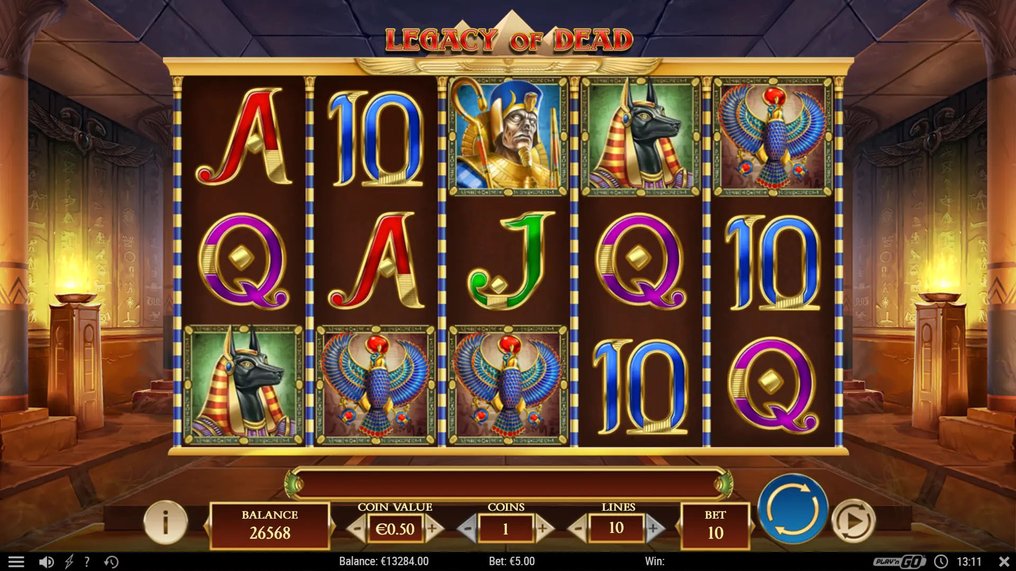
Discover how to use the trial mode, test features, and set limits so you can play prepared and calmly in Netherlands.
Sometimes you just want to feel how a slot "breathes" before you bet even one euro. Imagine: you have five minutes between work and dinner, and you want to quickly check if the pace and bonus ideas suit you. Then a play mode without real stakes is exactly what you need – you get to know the rhythm, without pressure.
In 2026, many people play shorter but more often: a quick session on mobile on the train, later on PC with more focus. That's precisely why testing is important. You can examine buttons, settings, and feature behavior, and immediately notice whether your attention stays with it or if you lose interest after ten spins. That sounds simple, but it prevents the most common mistake: starting directly on instinct, and only then discovering that you find the game too fast, too busy, or too flat.
It is important how you use this "tasting" or trial. Don't see it as a trick to linger longer, but as a checklist. You look at the pace, you try different bet levels (without money) to understand how the game cycle feels, and you make mental notes: when do you click through, when do you wait, when do you get distracted? If you then choose to play for real, you do so more consciously – in Netherlands, within local rules, and only if you are 18+.
All promotional incentive structure is clearly stated in writing and/or via electronic means in an easily understood manner. All codes are accompanied by an explanation of what the code is for, who is eligible to use the code, and how it should be used. As such, players are less likely to be confused about what is required of them in order to receive a reward and how the reward will be applied after receiving it. The promotional incentives provided to participants provide them with time to become familiar with the gaming system's mechanics, their interface, and progress, before deciding how deeply they wish to become involved with this platform. Therefore, players are encouraged to participate in an informed manner, rather than being pressured or tempted to act quickly.
Most players want no hassle: open, click, play. Imagine you're on your phone and the game loads just a bit too large, causing you to accidentally tap the wrong button. In that case, "starting" isn't just pressing a button, but also setting up your environment correctly: screen brightness, sound, and especially the speed at which the rounds run.
Start practically. First, choose the device you usually play on. On mobile, it's about clarity: buttons shouldn't be too close together, and you want quick access to settings without leaving the screen. On PC, you want calm: you see more at once, but you can also click faster and thus lose your sense of pace. That's precisely why you use the demo mode: you don't just test the game, you test yourself.
Pay attention to three things before you 'just play on'. One: check the speed settings (normal, fast, turbo) and set them consciously, not automatically. Two: turn sound on or off for a reason. Many people play silently 'just to test' and then miss signals that later help them stay in the moment. Three: see if you can easily pause. If you can stop quickly, you usually play better - because you control the session, not the game.
And one more thing: in Netherlands, you often encounter the game through platforms that offer access according to applicable rules. This means that the exact flow (with or without an account, with or without verification) may vary. In the demo mode, you can already discover how the game feels, but don't automatically make a deposit afterwards. First learn, then decide.
You can superficially 'just spin' a slot, but you can also test it in a targeted way. Imagine: you have a budget in mind for later, but you don't know if you play faster or slower when things get exciting. In demo mode, you can observe that behavior without it costing anything immediately.
Use this phase to answer two types of questions. The first is technical: what do the buttons do, how do you read the payouts, where do you find rules and info? The second is personal: do I become impatient, do I automatically speed up, or can I stay calm? If you notice this now, you can choose limits and settings more cleverly later.
Usually, within twenty rounds, you already feel if the pace suits you. Imagine catching yourself saying 'just one more time' when you actually have no plan – that's a signal. Lower the speed one step, play a short series, and see if your attention returns. Sometimes it's not the game that's 'too fast,' but your finger clicking too quickly.
Also test the difference between individual spins and auto-play. In individual spins, you make a choice each time, which helps you stay conscious. With auto-play, you quickly go on autopilot. Try both, but do it with a purpose: not to play more rounds, but to see which mode keeps you calm.
Buttons often seem obvious until you use them under pressure. Imagine playing later and suddenly wanting to check the rules, but you can't find the info panel because you're in a hurry. Solve that now: open the info overview, read the symbols, check any bonus explanations, and mentally note where everything is located.
Make it concrete: test increasing and decreasing bets, see how the game reacts to quick changes, and check if there's an option to limit animations (useful if you are sensitive to stimuli). The better you know this now, the fewer mistakes you'll make later due to haste.
The Quick Check for Mobile Overview
On a small screen, things go wrong due to one thing: too many taps in the wrong place. Imagine playing in bed with your thumb halfway across the screen – a misclick is almost guaranteed. Hold your device upright, don't zoom in unnecessarily, and test if all buttons remain reachable without cramping your hand.
Also check readability. Can you see your balance, bet, and winnings at a glance? If not, it's better to play in a calmer environment or choose PC. It sounds trivial, but poor ergonomics often lead to impulsive choices.
The Calm Check for Session Management and Pause
A good session has a beginning and an end. Imagine that after a few minutes you notice you're getting tired, but you keep playing because you're 'just in the flow'. Therefore, consciously test how you pause: can you stop immediately, can you open settings without stress, and can you close the screen without feeling you 'have to finish something'?
Make it a mini-ritual: after each short series, pause for a moment. Not long, just one breath and a choice: do I continue or do I stop? This small moment will make a big difference later.
If you play with real money later, you rarely win with a 'magical strategy'. You win primarily through control. Imagine you plan to play for ten minutes, but you end up playing for half an hour because you haven't built in a stopping point anywhere. Settings are then not a detail, but your steering wheel.
Start with your own limits, not with the game's buttons. Choose a session duration, decide if you play with sound, and determine if you use auto-play at all. Only then do you look at bet level and pace. In Netherlands, responsible gaming tools are often part of the platform, but you need to activate them. Don't wait until you notice you're staying too long.
|
What You Test In Demo Mode |
What To Pay Attention To |
Why It Helps |
Quick Tip |
|
Bet Buttons |
Are they clear and easily reset? |
Prevents impulsive increases |
Keep one 'standard bet' in mind |
|
Speed |
Normal vs fast vs turbo |
Influences your sense of control |
Always start at normal pace |
|
Auto-play |
Do you go on autopilot? |
Helps conscious decision-making |
Limit to a short series, then stop |
|
Info and Rules Screen |
Do you find it immediately? |
Less stress during the session |
Open it once before playing |
|
Sound and Notifications |
Calm or too stimulating? |
Keeps your attention on your plan |
Turn volume low, not necessarily off |
|
Screen Layout |
Readability of stake and balance |
Fewer errors due to misclick |
Test on the device you actually use |
Many players set limits 'later'. Imagine thinking: I'll stop as soon as I get bored - but you only get bored when you've been going on for too long. Therefore, set a time limit or a clear session boundary in advance, and make it concrete: one short session, then stop, period.
Also choose a limit for how often you change your stake. That sounds strange, but it works: if you only allow yourself to increase it once per session, your game remains calmer. And if you notice that you still want to adjust it constantly, that's information - maybe this isn't your type of slot for relaxed play.
Even if you primarily test in demo mode, it's smart to keep your habits secure. Imagine later using an account and quickly choosing a simple password 'for convenience'. That convenience sometimes comes back to bite you with stress. Choose a strong password, use extra security where possible, and don't log in everywhere at once.
Also pay attention to privacy on shared devices. If you're on a work PC or family computer, log out properly. It's not about paranoia, but about routine. A good routine makes responsible gaming easier.
Sometimes the best 'setting' is just to stop. Imagine noticing you're clicking faster and faster and your shoulders are hunching - your body is telling you enough. Take a break, drink water, walk away for a bit. If you're still agitated after five minutes, stop your session entirely.
Don't make it too difficult for yourself. You don't have to prove you 'have control' by continuing to play. Control is precisely being able to stop when it still feels good.
The transition from testing to real money is when people make mistakes. Imagine you've played hundreds of rounds in demo mode and you think: I know this game now. Then you dive in, turn on turbo, and suddenly everything feels different. That's normal: as soon as money is involved, your attention and pace change.
Therefore, make the transition small. Start with a short session, choose a stake you're okay with losing beforehand, and keep the speed low. The goal is not 'to win now', but 'to maintain the same calm behavior as during testing'. If you succeed at that, you're already playing smarter than most people.
Create a mini-plan that you can remember in one sentence. Imagine: 'Ten minutes, low stake, no automatic spins, then stop.' That's clear. Stick to one goal per session: either you test tranquility, or you test the buttons, or you test your stopping point. Doing everything at once usually ends in chaos.
Also use a fixed closing routine. For example: after a short series, close the game, not just the tab. That sounds exaggerated, but it breaks the habit of 'just one more'.
Many players change their stake and speed as soon as something exciting happens. Imagine you just saw a nice hit and you think: now I need to scale up. Turn that thought into a rule: only decide after a break, never during the peak. This prevents emotion from controlling your settings.
If you still want to vary, do it in a controlled manner. One change, short test, back to basics. You'll then notice faster what the change really does, and you'll maintain control over your own rhythm.
Responsible gaming is not just a warning text, it's a set of buttons that can make your life easier. Imagine you have a busy week and you notice you're playing to escape, not for pleasure. Then a time-out isn't a punishment, but a reset.
Know that many platforms have options to temporarily pause or self-exclude for longer periods. It varies per provider, but the principle is the same: you set boundaries in advance that are non-negotiable later. And yes, in Netherlands, you only play if you meet the age requirement (18+) and stay within local rules – that context belongs to your choice.
Support isn't just for technical issues. Imagine you can't find a setting, or you don't understand why a button is gray. Then ask. That prevents you from "tinkering around" and unconsciously playing longer than planned.
And if you notice that playing causes tension instead of relaxation, seeking help is a strong step. That can start with a time-out, or by talking to someone you trust. You don't have to wait until it feels big.
With these types of slots, mistakes are usually not technical, but human. Imagine you say: I'll just play for a moment, and suddenly an hour has passed. That rarely comes from one big decision, but from small automatic choices: too high speed, no break, and always "just one more" without a plan.
The solution is boring, but it works: make everything smaller. Shorter sessions. Lower speed. Clear stopping points. And most importantly: use the demo mode as an exercise in control, not as an endless time-filler.
When things get tense, your brain wants to speed up. Imagine your heart rate increases and your hand is already moving towards turbo without you realizing it. Then literally stop for one second, exhale, and ask yourself one question: "Am I still playing according to my plan?" If the answer is no, go back to basics or stop.
Make it concrete with a simple rule: always slow down when tense. No big decisions in a peak moment. That sounds small, but it's precisely the difference between "playing" and "getting carried away".
Usually, you can access the play mode without real stakes through a provider offering the game, but whether you can start immediately varies per platform. Imagine you just want to feel the tempo – then choose an option where you can load immediately, and use that short session to test buttons, speed, and pauses. If you find that you do need an account later, don't rush it: choose strong login credentials, enable extra security where possible, and only then decide whether to continue.
Free rounds are not a "teaser to warm you up"; they are a training ground. Imagine you discover that you always click faster as soon as something fun happens – you learn that here, without it costing you money. You use that information to make your real sessions calmer: lower speed, clear pause moments, and a fixed plan to prevent emotion from taking over.
Start with what protects you, not with what makes the game faster. Imagine you only stop when you're tired – then you're usually already playing too long. Therefore, first set a session limit for yourself (time or number of short series), choose a calm pace, and decide if you use automatic spins at all. Only then look at the stake level, so you start from control instead of impulse.
Pay attention to recurring signals: faster clicking, less reading, and the feeling that stopping is a "waste." Imagine you hear yourself thinking: just one more and then I'll stop – if you repeat that twice, it's time for a break. A simple trick is a fixed stopping moment: after each short series, you get up for a moment or do something else, so your brain breaks out of the flow and you consciously choose again.
Yes, but you have to organize it differently. Imagine you're on mobile in a busy environment and your thumb keeps mis-tapping – that makes you hurried, and haste leads to mistakes. On mobile, it helps to lower the pace, limit notifications, and only play when you truly have some peace. If you notice that you automatically speed up on mobile, PC is often better for controlled sessions.
Then stopping is not a weakness, but self-care. Imagine you play to avoid feeling how your day was – that increases the risk of your boundaries blurring. Take a time-out, set a break for yourself, and do something that truly relaxes you (walking, showering, talking to someone). If it happens more often, look into additional resources such as longer breaks or support, so that playing becomes a choice again and not an escape.
Keep it simple and practical: only play if you meet the age requirement (18+) and set non-negotiable boundaries in advance. Imagine you're not sure exactly what settings your platform offers – then focus on your own plan: short sessions, fixed stakes, no impulsive increases, and clear stopping points. If a platform has extra tools like time-outs or exclusion options, use them as an extra safety net, but primarily rely on your routine.
Legacy of Dead is a fascinating game that combines the best of online slots with an exotic and exciting theme.